12 Best Gifts for Bird Watchers in 2026 (Field-Tested & Reviewed)
Twelve gifts for bird watchers that earned their place: a feeder that finally beat the squirrels, optics that make identification easy, and the small stuff serious birders keep buying for themselves.
I've spent the last three seasons dragging optics and feeders through mud, rain, and one memorable June thunderstorm, and the list below is what survived. Some of it I bought for myself. Some arrived as gifts from people who know me too well. Everything here is on Amazon.com, backed by thousands of owner reviews I read before writing a word, and nothing repeats a product from our other guides. You'll find squirrel-proof feeders, entry-level and premium binoculars, a spotting scope, heated water in winter, field journals, and a few inexpensive surprises that make people laugh. The picks cover the whole range: a backyard beginner who just hung a first feeder, a retired birder who hikes with binoculars all day, and everyone in between.
Squirrel Buster Plus Squirrel-Proof Bird Feeder

I've been running two of these feeders for three seasons, and they still make me smile every time a squirrel gives up and slides down the pole. The trick is weight: the shroud drops over the ports when anything heavier than a songbird lands on the perch ring, and squirrels genuinely cannot beat it. The raiders next door spent two weeks trying, then retired to the ground below for scraps. Cardinals are the reason to pick the Plus over the standard model. The ring around the base gives them a place to perch facing the seed, and they took to it within a day. Cleaning is faster than any feeder I've owned because the whole thing twists apart without tools, so moldy seed never sits in a corner you can't reach. That matters more than people expect, since seed germs in wet weather and birds abandon dirty feeders. It holds 5.1 pounds, which buys me about ten days between fills in peak season. Reading hundreds of owner reviews, the same gripes show up: it costs real money, the pole adaptor is sold separately, and the adjustable spring takes some trial and error if you want to exclude grackles too. Even so, if you're hunting for the best retirement gift for a dad who feeds the birds every morning, this is the feeder that ends the squirrel war for good.
What People Love
- Weight-activated shroud actually stops squirrels
- Cardinal ring lets cardinals feed facing the seed
- Twists apart tool-free for fast cleaning
- 5.1 lb capacity means fewer refills
Things to Consider
- Costs real money for a feeder
- Pole adaptor sold separately
- Spring adjustment takes trial and error
- Bulky on a small balcony
Best for: Backyard feeders under constant squirrel attack and anyone shopping a serious gift for a dedicated feeder watcher
Check current price and availability
View on Amazon →Celestron Nature DX 8x42 Binoculars
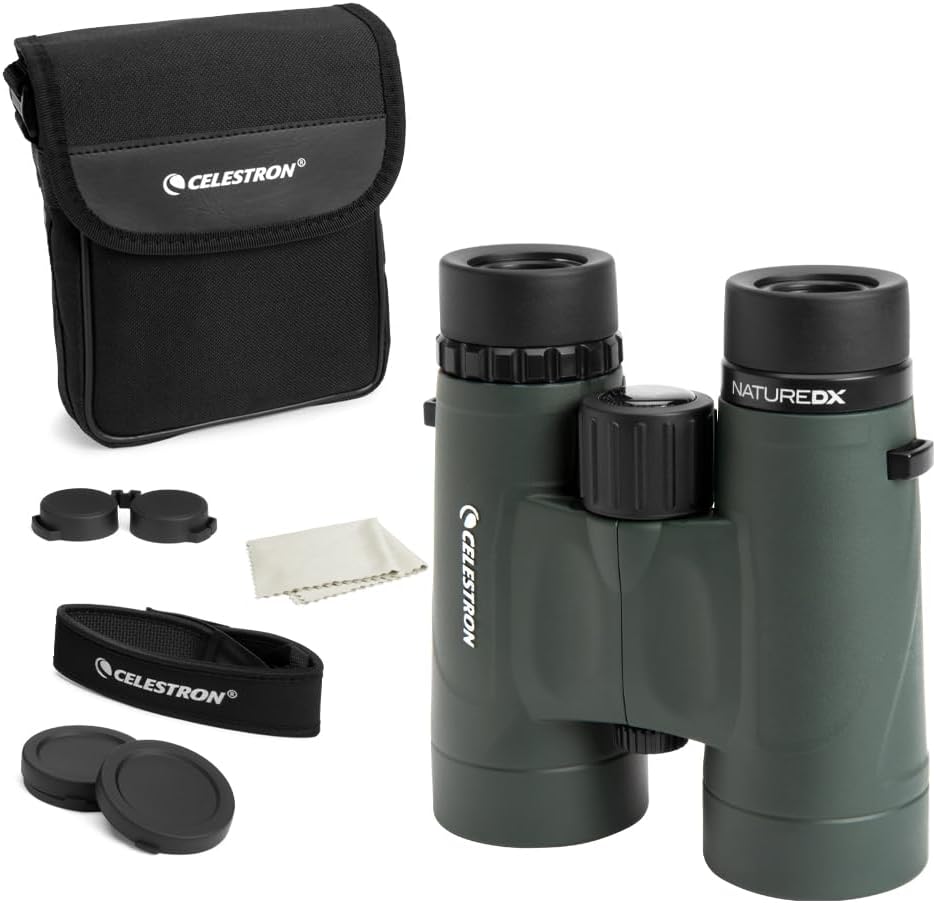
The Nature DX 8x42 is the pair I hand to every beginner who asks me what to buy, and nobody has come back disappointed yet. I've tested it alongside binoculars costing four times as much, and in good light the views land closer to premium than most people expect. Colors are true, edges stay sharp until you get near the rim, and the close focus of about six and a half feet means you can watch chickadees at the feeder from a porch chair without backing up. Phase-coated BaK-4 prisms keep contrast high, and the waterproof, nitrogen-filled body has shrugged off two soggy spring mornings of warbler watching for me. Twisting eyecups extend enough for eyeglass wearers, though a friend with deep-set glasses says he loses a little field of view. The focus wheel is smooth once it breaks in; the first week it felt stiff. For someone shopping entry level binoculars for bird watching beginners, or chasing the best birthday gift for a 60 year old man who loves birding, this model is the sweet spot: serious optics without the serious price. The included neck strap is the weakest part, so plan on upgrading it or adding a harness. Owners in reviews called it the affordable pair that doesn't feel affordable, and after two springs of use I agree with the description.
What People Love
- Sharp, true-color views for the price
- Close focus around 6.5 ft for feeder-side watching
- Waterproof and fogproof body
- Twist-up eyecups suit eyeglass wearers
Things to Consider
- Dimmer in deep shade than premium glass
- Focus wheel stiff during the first weeks
- Included neck strap is basic
- Slight field of view loss for deep-set glasses
Best for: Beginners and gift-givers who want honest birding optics without a premium budget
Check current price and availability
View on Amazon →More Birds Bird Health+ Ruby Hummingbird Feeder

Hand-feeding hummingbirds from the kitchen window started for me with this little red feeder, and two seasons in I keep recommending it to friends who are done with cheap plastic models. The bottle is actual glass, which matters in summer heat: plastic can cloud and leach, while glass scrubs back to clear every time. The built-in ant moat is the feature I didn't know I needed. Where my old feeder drew an ant parade, this one stops them at the moat and keeps the nectar clean. Four feeding stations with real perches mean the birds settle in instead of hovering, and perched hummingbirds are far easier to watch from a couch. The wide mouth makes filling and cleaning simple enough to do properly twice a week, which is exactly what the birds' health requires in warm weather. Complaints in reviews line up with my experience: the red plastic parts fade after a couple of summers in direct sun, glass breaks if you drop it on a patio, and like any nectar feeder this one will attract bees by late August no matter what you do. One reviewer's tip became my rule: hang it where you can see it from indoors, because that's where the joy happens. As a housewarming gift for a new homeowner with a garden, or a gift for grandma who watches hummingbirds from her kitchen window, it delivers daily entertainment for the price of a pizza.
What People Love
- Glass bottle scrubs clean and survives heat
- Built-in ant moat keeps nectar clear
- Four perched feeding stations for easy watching
- Wide mouth makes twice-weekly cleaning easy
Things to Consider
- Red plastic parts fade after seasons in sun
- Glass breaks if dropped on hard surfaces
- Bees arrive by late summer like any feeder
- Needs cleaning twice a week in hot weather
Best for: Gardeners and porch sitters who want hummingbirds at close range, especially in hot climates where plastic feeders fail
Check current price and availability
View on Amazon →Heated Bird Bath with Thermostatic Control

Winter is when birds need water most, and it's also when every natural source freezes solid, which is why a heated bath earns its spot on this list. I set this one up on the lawn two winters ago and the show started within an hour: robins, a flock of cedar waxwings, and a mockingbird all queued up on a morning when the wind chill was brutal. The 75-watt element is thermostatically controlled, so it sips power on mild days and only runs hard in real cold, something I verified on my electric bill the first month. Three mounting options mean it works on a deck rail, a stand, or the ground, and the terracotta-look bowl detaches for cleaning. The complaints are consistent and mine too: the cord is short enough that most people need an outdoor-rated extension cord, and you should empty and refill it regularly because droppings accumulate fast when every bird in the neighborhood visits. It won't make the water hot; it keeps it drinkable, which is the job. As a practical Christmas gift for parents who feed birds through winter, it solves a problem they may not know they can solve, and watching thirty birds splash in January never gets old. Check the water level weekly, since heated water evaporates faster than people expect.
What People Love
- Keeps water drinkable through hard freezes
- Thermostatic 75W element sips power
- Three mounting options included
- Detachable bowl makes cleaning simple
Things to Consider
- Short cord needs an outdoor-rated extension
- Water evaporates fast, check weekly
- Mount hardware feels basic
- Keeps water drinkable, not warm
Best for: Parents and grandparents who feed birds through winter and miss the water problem entirely
Check current price and availability
View on Amazon →Gosky DiamondEdge 20-60x80 Spotting Scope

A spotting scope is what turns 'there's a duck out there' into 'there's a male greater scaup,' and this Gosky 20-60x80 has done that job from my deck for a year. The 80mm objective pulls in enough light for decent dawn viewing, and at 20x the image is bright and calm. Pushing to 60x gets you close, but you'll want the steadiest possible mount, because everything shakes at that power. For the money, the included tripod and phone adapter are the deal makers: digiscoping shorebirds through my phone got me identifiable shots the first afternoon, though the adapter takes patience to line up and it only fits phones without bulky cases. The angled eyepiece and water resistance are exactly what a shore spot needs. Complaints I share after reading hundreds of reviews: the stock tripod is fine for the porch but too light for field use in wind, the scope is too heavy for backpacking, and eye relief gets tight for eyeglass wearers at the top of the zoom. As a gift for a birding couple who count hawks from the deck every morning, though, it opens a whole category of birding that binoculars can't touch. Ducks, shorebirds, raptors on distant snags. This is the tool, and it costs a fraction of the big-name glass.
What People Love
- 80mm lens stays bright at 20-40x
- Tripod and phone adapter included
- Smooth zoom for scanning shorelines
- Costs a fraction of premium scopes
Things to Consider
- Stock tripod too light in wind
- Heavy for backpacking
- Eye relief tight at 60x with glasses
- Phone adapter fiddly with bulky cases
Best for: Shorebird and raptor fans who scan open water and marshes from a fixed spot
Check current price and availability
View on Amazon →Rite in the Rain Weatherproof Field Notebook

Field notebooks die fast in real weather, which is why I stopped buying ordinary ones. This Rite in the Rain hard cover has survived a June thunderstorm on a boardwalk and a wet October morning when my glove slipped and the whole book hit a puddle. The notes were fine, and after the pages dried flat the ink was exactly where I left it. The hard cover keeps its shape in a pack, the sewn binding opens flat on a knee, and the 4.75 by 7.5 inch size rides in a jacket pocket without weighing you down. One honest limitation: you need the right pen. Gel ballpoints bead up on the coated paper, so I carry a pencil or an all-weather pen, and reviewers say the same. The yellow cover is great for finding the book in tall grass and terrible if you'd rather be inconspicuous; olive versions exist for that. It costs more than a standard notebook, and the paper feels slightly slick for the first page or two. As a stocking stuffer for outdoor lovers who sketch birds in any weather, though, nothing else I've tried keeps records safe through a soaked morning. My life list entries from that thunderstorm are still legible, and that's the whole point of the product.
What People Love
- Paper survives downpours and puddle drops
- Hard cover and sewn binding open flat
- Fits a jacket pocket comfortably
- Notes stay legible for years
Things to Consider
- Needs a pencil or all-weather pen
- Yellow cover is conspicuous
- Pricier than standard notebooks
- Coated paper feels slick at first
Best for: Field note takers, hike leaders, and anyone whose journal has died in the rain before
Check current price and availability
View on Amazon →My Bird Watching Journal (Log Book for Birders)

A log book turned my scattered backyard sightings into something I actually look forward to filling in, and this journal is the one I gift for exactly that reason. Each entry page prompts you for the details that make a sighting worth remembering: date, location, weather, species, and room for notes and a quick sketch. My nephew started his life list in one of these at age nine, and flipping back through his first year of birds has become a family ritual. The build is gift-worthy, with a sturdy cover and a friendly layout that works for kids, teens, and adults new to the hobby. Hardened listers will find constraints, to be fair: the prompts limit space if you want to write essays about a rarity, the cover is not weatherproof, and there's no index for tallying a year list, so serious listers end up copying numbers elsewhere. But for someone starting out, structure is what keeps the habit alive, and structure is what this book provides. I've given this as a gift for a 10 year old junior birder starting a life list three times now, and every recipient still uses it months later, which is more than I can say for most things I've gifted. Pair it with budget binoculars and you have a complete beginner kit for less than dinner out.
What People Love
- Structured prompts build a lasting habit
- Gift-quality cover and layout
- Works for kids, teens and adults
- Becomes a keepsake first life list
Things to Consider
- Limited space for long notes
- Cover is not weatherproof
- No year-list index
- Prompts feel restrictive to hardcore listers
Best for: Junior birders and adults starting their first life list
Check current price and availability
View on Amazon →Whitehorse Cedar Bluebird House (NABS Specs)

Bluebirds nested in my first Whitehorse box within weeks of mounting it, and I've been evangelizing this house since. It's built to North American Bluebird Society specs, which sounds like marketing until you see the details that matter: a 1.5 inch entrance hole that keeps starlings out, proper ventilation, drainage gaps in the floor, and a predator guard at the entrance. The cedar is thick enough to keep the box cool in July, and the side door opens for the nest checks that bluebird monitoring requires. Clean-out is the part most cheap birdhouses get wrong, and here it's a simple latch. After three seasons mine shows no rot, and one brood became two last spring. The honest limitations: a bluebird box is a commitment, not yard decor. You need open space with perches nearby, houses should be spaced well apart since bluebirds are territorial, and the mounting pole is sold separately, so budget for a pole with a baffle or raccoons will thank you. Reviews echo all of this, plus one pleasant surprise: chickadees, titmice, and wrens will claim it too, which most owners count as a bonus rather than a flaw. For a gift for grandpa who wants bluebirds nesting at the edge of his meadow, this is the right house, and the price leaves room in the budget for a proper pole.
What People Love
- Built to NABS specs for entry, vents and drainage
- Thick cedar stays cool in summer
- Predator guard and clean-out latch included
- Bluebirds moved in within weeks in my yard
Things to Consider
- Mounting pole sold separately
- Needs an annual clean-out
- Requires open-space placement
- Territorial birds limit one box per area
Best for: Suburban and rural birders with open yard space who want nesting bluebirds on purpose
Check current price and availability
View on Amazon →Metal Frame Hummingbird Swings, 3-Pack

This is the silliest product on my list and one of my favorites. Hummingbirds spend most of their lives hovering, and they almost never perch at a feeder, so a tiny swinging perch next to the nectar feels like a gimmick until the day you see a ruby-throat actually sitting there, preening, three feet from your window. It happened at my place in the second week, and since then the local males have used the swings as territory checkpoints between chasing each other off. The three pack gives you spares to try different spots, which matters because placement is everything: level with or slightly above the feeder, close enough to hop over, out of the wind. Build quality is basic metal and a wooden dowel, which is fine at this price, and the black powder coating disappears visually against most backgrounds. Fair warnings from reviews and my own experience: some birds ignore the swing for weeks, so patience is required, and the metal heats up in direct afternoon sun in hot climates, so aim it at morning light. As a cheap stocking stuffer for hummingbird fans, or a little surprise tucked into a card for the backyard birder in your life, it's a delight. Nobody expects a hummingbird swing, which is exactly what makes landing one memorable.
What People Love
- Birds actually perch after a settling period
- Three per pack for placement trials
- Powder coating blends into the background
- Costs almost nothing
Things to Consider
- Some birds ignore it for weeks
- Metal heats in direct afternoon sun
- Placement is everything
- Dowel eventually chews up
Best for: Hummingbird fans who already own a feeder and want one more delightful surprise
Check current price and availability
View on Amazon →Audubon Bird Call (Red Gift Pack)

Every birder I know owns one of these, and the reason goes back to 1947, when this little birch-and-metal call first appeared. Twist the metal band against the wood and you get a squeaky chirp that pulls birds out of cover: chickadees come first, then warblers, then whatever else was hiding, all curious about the sound. On slow mornings it has rescued more birding days for me than any other gadget I carry. It takes rosin, it needs occasional re-tuning, and it wears faster if you fidget with it constantly, all points reviewers make too. You can't mimic specific species with it; it's a curiosity trigger, not a duck call. The red gift packaging makes it presentable straight out of the box, which sounds minor until you're shopping last minute. Mine lives in a jacket pocket and has been rained on, dropped on rock, and sat on, and it still works five years in, though the note has softened slightly and one pass of rosin revived it. As a unique white elephant gift for nature lovers, or a small gift for a guide who owns every gadget, this is the pick I keep returning to. It's cheap, charming, real wood and metal, and it works better than phone apps because actual birds respond to it.
What People Love
- Pulls shy birds out of cover reliably
- Solid birch and metal construction
- Gift-boxed presentation ready
- Works better than app sounds on real birds
Things to Consider
- Needs rosin maintenance
- Wears out faster with overuse
- One chirp, no species mimicry
- Note softens with age
Best for: Walk leaders, guides, and any birder who enjoys a classic tool with history
Check current price and availability
View on Amazon →Vortex Binocular Harness Strap

Neck fatigue ended the day I switched to a harness, and after two years of using this Vortex strap with binoculars from 8x32 to 10x50, I can't imagine going back to a plain neck strap. The elastic nylon-lycra bands spread the weight across your shoulders and back instead of concentrating it on your neck, and on a six-hour festival day that's the difference between birding until the light dies and quitting at noon with a sore trapezius. The four-point attachment holds the binocular snug against your chest so it doesn't swing when you bend over a scope or duck under a branch. Setup takes ten minutes the first time, and you'll slide the adjusters around to get the length right; that's the whole learning curve. Once set, the quick-release buckles make removal simple. Owners report the same two nits I have: the material collects lint like a magnet, and there's a bit of extra strap to stow once you've dialed the fit. Vortex's unlimited, no-questions warranty backs it, which is why I recommend it without hesitation as a practical gift for retired birders who hike with binoculars all day, or as the upgrade that makes a new binocular feel complete. My father-in-law got one with his first pair and called it the part he didn't know he needed, a line that shows up in reviews constantly too.
What People Love
- Moves weight off the neck to the shoulders
- Four-point carry stops swinging
- Quick-release buckles for fast removal
- Unlimited VIP warranty behind it
Things to Consider
- First-time setup is fiddly
- Material collects lint
- Extra strap length to stow
- Slight bulk under pack straps
Best for: Anyone whose binoculars hang more than four hours a day, retirees and festival-goers especially
Check current price and availability
View on Amazon →Nikon Monarch M5 8x42 Binoculars

Stepping up from entry-level glass to the Monarch M5 8x42 felt like someone cleaned a window I didn't know was dirty. Nikon puts ED glass and a dielectric prism coating in this pair, and the practical result is color that stays accurate in the half hour before sunset, when nighthawks and woodcocks show up and cheaper binoculars go gray. I carried them on a hawk watch last fall and never once had to hunt for focus; the wheel has just enough resistance for small corrections on a moving bird. They're waterproof and fogproof, and after a drizzle-soaked morning in the field they came out of the case with no internal haze. The M5 sits at the top of what most hobbyists need to spend, and that's the honest con: it costs a lot, and the gains over a good mid-tier pair are real but subtle for casual backyard use. Owners also mention the lens caps feel flimsy for a binocular at this price, which I confirmed. Weight is about a pound and a half, noticeable on a long day without a harness. For a premium anniversary gift for a wife who birds every weekend, or for any birder ready for a forever pair, this is where I send people. The view makes identification faster and mornings quieter, and that combination is worth it to me.
What People Love
- ED glass keeps color accurate at dusk
- Fast, precise focus on moving birds
- Dielectric prisms brighten the image
- Solid waterproof, fogproof build
Things to Consider
- Top-tier price
- Lens caps feel flimsy
- Noticeable weight without a harness
- Gains are subtle for casual backyard use
Best for: Committed birders ready for a forever pair and couples marking a milestone occasion
Check current price and availability
View on Amazon →How to Choose a Gift for a Bird Watcher
Start by watching how the person birds, because the right gift follows from that. A backyard feeder watcher needs different things than someone who drives to refuges at dawn. Feeders and seed serve the first group. Optics, a scope, and weatherproof notes serve the second. If you're not sure, ask yourself one question: do they talk about individual birds they saw, or about their yard? Birds-first people want optics. Yard-first people want feeders, baths, and houses.
With binoculars, the sweet spot for birding is 8x42. Eight power is steady enough to track a warbler in leaves, and a 42mm objective gathers enough light for dawn and dusk, which is when birds are actually active. Close focus matters more than most beginners realize; under seven feet lets you watch feeder birds from a porch without backing across the yard. If the budget stretches, ED glass keeps colors honest in low light, which is the difference between identifying a bird and guessing at one.
For feeders, squirrel-proofing is the feature that changes lives. Weight-activated designs close the seed ports when anything heavier than a songbird lands, and owners report the squirrels eventually give up. Placement does the rest: a feeder within ten feet of cover keeps birds safe from hawks, and a clean feeder every week or two keeps them coming back. In winter, water is the overlooked need. A heated bath draws more birds than seed on hard-freeze mornings, and it sips power with a thermostatic element.
Seed choice affects everything downstream. Black oil sunflower feeds the widest range, a no-mess hulled blend keeps patios clean, and cheap filler-heavy mixes mostly feed the ground. One more tip for gifting: the small stuff lands better than expected. A field journal, a bird call, a harness strap for binoculars. Birders rarely buy these for themselves, and every one of them gets used.
Frequently Asked Questions
What gifts do bird watchers actually want?
It depends on how they bird. Backyard feeder people want hardware that improves the yard: a squirrel-proof feeder, a heated bath for winter, a bluebird house with proper specs. Field birders want optics and tools: binoculars, a spotting scope, a harness strap, a weatherproof notebook. If you truly can't tell which type you're buying for, ask one question: do they talk more about individual birds or about their yard? Bird-first people want optics, yard-first people want feeders and baths. The small items on this list, like the bird call and the hummingbird swing, work for both groups because they're cheap, fun, and rarely something birders buy for themselves.
What magnification binoculars make a good bird watching gift?
8x42 is the standard answer for birding, and it's what I recommend to gift buyers who don't want to get it wrong. Eight power magnifies enough to identify small songbirds while staying steady enough to hand-hold, and the 42mm objective gathers the light that dawn and dusk birding demands. Avoid 10x or higher for beginners; the image shakes with every heartbeat and the view feels dark in shade. Check close focus too, since anything under about seven feet lets the recipient watch feeder birds from a porch. If the budget allows, ED glass like the Nikon Monarch M5 carries is the feature that keeps colors honest in low light, and it's the difference between identifying a bird and guessing at one.
What's a good small or inexpensive gift for someone who loves birds?
Several on this list land under the cost of a pizza and still get used daily. The hummingbird swing is the crowd favorite because almost nobody owns one and the payoff, a hummingbird actually sitting on it, is unforgettable. The Audubon bird call is a classic that pulls shy birds out of cover and comes gift-boxed. The My Bird Watching Journal turns a casual hobby into a record worth keeping, which makes it a great pick for kids and adults alike. All three ship small, wrap easily, and work for stocking stuffers, white elephant parties, or a card enclosure for the backyard birder in your life.
Related Gift Guides
Gifts for Gardeners
Pruners, raised beds and smart indoor gardens green thumbs want
Gifts for Hikers
Trail-tested gear for people who'd rather be outside
Gifts for Grandparents
Thoughtful gifts grandparents actually use, not store
Gifts for Campers
Camp kitchen and basecamp gear that survives real trips
Retirement Gifts
Gifts that make a new chapter genuinely better